Grey squirrel management

Protecting woodland from grey squirrel bark stripping.

Grey squirrel bark stripping is one of the most significant threats to broadleaf woodland in the UK. Hartland provides evidence-based assessment and management planning to help land managers respond proportionately and effectively.

Discuss your woodland
Grey squirrel on a tree in British woodland
Understanding damage on the ground is the first step towards proportionate management.

Understanding the scale of the problem.

Grey squirrels were introduced to the UK in the nineteenth century and have since spread across most of England and Wales. Their habit of stripping bark from young broadleaf trees causes direct damage to timber, disrupts woodland succession and can contribute to the decline of native species. Effective management requires a clear picture of the damage on the ground before any action is taken.

How bark stripping affects woodland

The impact goes deeper than the surface.

Ring barking

When bark is removed all the way around a stem, the tree loses its ability to transport water and nutrients between roots and canopy. This can kill the stem above the wound within a single growing season.

Fungal entry and decay

Exposed wood provides an entry point for fungal pathogens. Even partial stripping can lead to long-term structural weakness, reduced timber value and accelerated decline in older trees.

Woodland succession

Repeated damage to young trees in the 10 to 40 year age class can disrupt the natural regeneration of broadleaf woodland, reducing canopy diversity and long-term resilience.
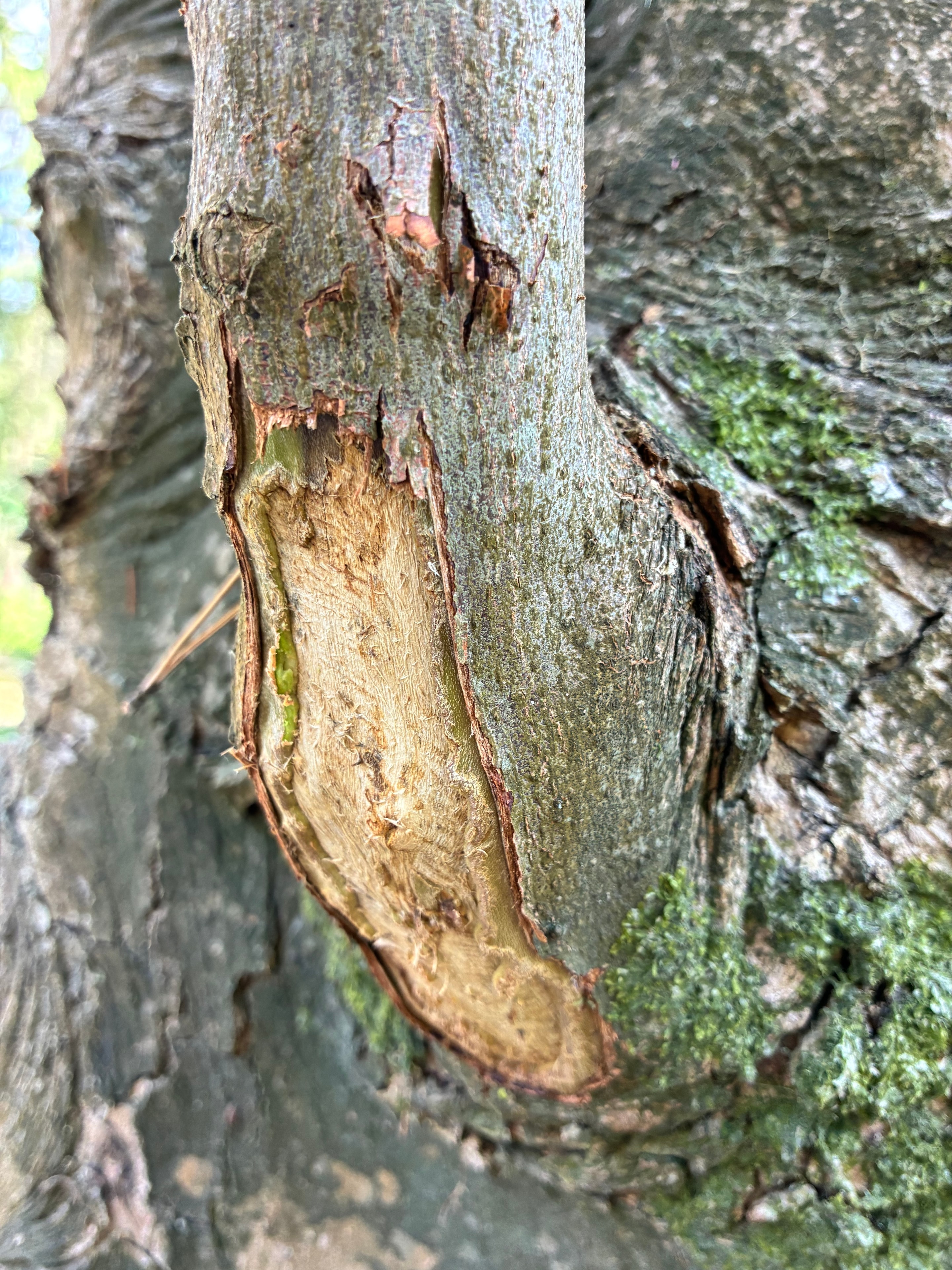
Close-up evidence of grey squirrel bark stripping on a woodland tree
Fresh bark stripping can help identify where closer assessment is needed.

Evidence of squirrel damage

Look beyond the missing bark.

Bark stripping can expose living tissue, weaken a tree and create routes for decay. Recording the location, extent and pattern of damage helps build a clearer picture of pressure across a woodland and supports proportionate next steps.
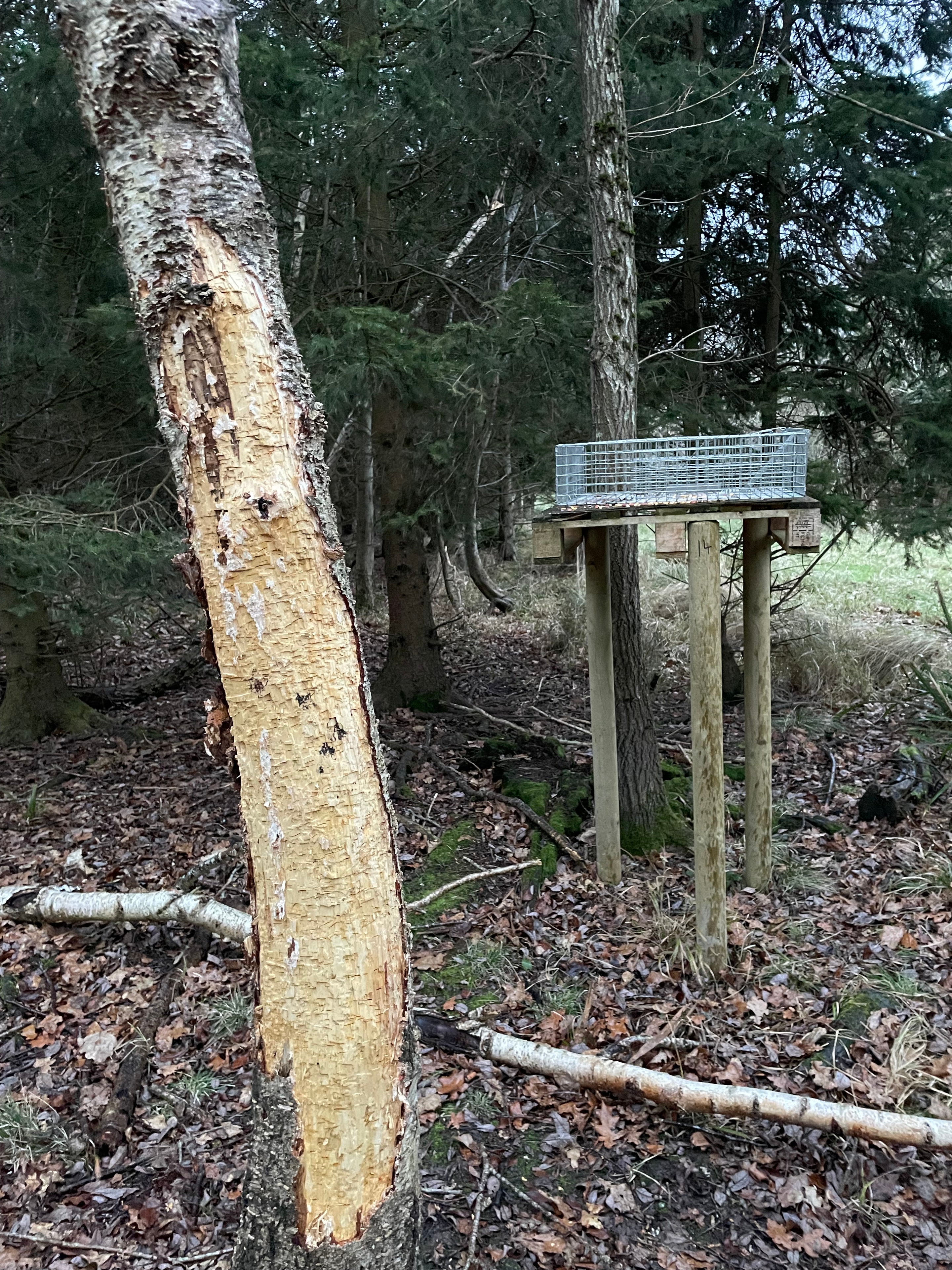
Grey squirrel bark stripping and a live trap used during woodland management
Field records can link visible bark damage with the wider management activity taking place on site.

From evidence to action

Management should follow a clear assessment.

Evidence of bark stripping helps identify where grey squirrel pressure may be affecting woodland condition. Any management activity should be planned, carried out responsibly and reviewed alongside ongoing monitoring, so decisions remain proportionate to the site and its objectives.

Assessment and monitoring

A structured approach to understanding squirrel pressure.

01

Baseline survey

A systematic walk of the woodland to record the location, species, height and extent of bark stripping damage. This establishes the current level of grey squirrel pressure across the site.

02

Damage mapping

Survey findings are mapped to identify the areas of greatest concern, the tree species most affected and any patterns that suggest where squirrel activity is concentrated.

03

Management planning

Based on the evidence, a proportionate management plan is developed. This sets out recommended actions, monitoring intervals and the criteria for reviewing the approach over time.

Common questions

Grey squirrel bark stripping, explained.

Why do grey squirrels strip bark from trees?
Grey squirrels strip bark primarily to access the sweet, nutrient-rich sap layer beneath, known as the phloem. This behaviour is most common in late spring and early summer when sap flow is at its peak. Young broadleaf trees between 10 and 40 years old are most vulnerable, though mature trees can also be affected. The behaviour is not fully understood but population density, food availability and tree species all appear to influence its frequency.
What damage does grey squirrel bark stripping cause?
When grey squirrels remove bark all the way around a stem or branch — known as ring barking — they interrupt the flow of water and nutrients between the roots and the canopy. This can kill the stem above the wound, create entry points for fungal decay and, in severe cases, contribute to the death of mature trees. Partial stripping can weaken timber quality, reduce future canopy potential and leave trees more susceptible to other stresses.
Which tree species are most at risk from grey squirrel bark stripping?
Broadleaf species are most commonly affected, with beech, sycamore, oak, sweet chestnut and hornbeam among the most frequently damaged. Beech is considered particularly vulnerable because its thin bark makes ring barking easier and the resulting wounds are often severe. Conifers can also be stripped but are generally less susceptible than broadleaves.
How do you identify grey squirrel bark stripping in a woodland?
Fresh bark stripping appears as pale, exposed wood on stems or branches, often with fragments of bark on the ground below. Older wounds darken over time and may show signs of fungal staining or decay. Damage is typically found on the main stem between one and four metres above ground, though branches can also be affected. Recording the location, species, height and extent of damage helps build a picture of squirrel pressure across a site.
How is grey squirrel bark stripping managed?
Management typically involves reducing grey squirrel population density in and around vulnerable woodland through trapping or shooting, carried out under the relevant legal framework. An evidence-led approach — assessing damage, identifying priority areas and monitoring outcomes — helps ensure management is proportionate to the level of impact. Hartland provides impact assessments and management planning to support land managers in making informed, responsible decisions.
Are there grants available for grey squirrel management in England?
Yes. The England Woodland Creation Offer (EWCO) includes grey squirrel control as an eligible activity under the WS1 and WS3 woodland management options. The Countryside Stewardship Programme (CSP) also includes options relevant to squirrel management in certain woodland contexts. Eligibility depends on the woodland type, management objectives and the evidence gathered through an impact assessment.

Field note 03

Responsible management

Evidence first. Action proportionate to impact.

Grey squirrel management should always be grounded in a clear understanding of the damage present and the woodland objectives of the site. Hartland works with land managers to ensure any control activity is legal, targeted and reviewed against measurable outcomes.

Get in touch

Hartland can carry out a squirrel impact assessment and help you develop a management plan suited to your woodland and its objectives.

Hartland Wildlife Management and Training

Supporting farmers, estates, and landowners across the UK with practical, responsible wildlife management and training.

Work with Hartland

UK-wide support for farmers, estates, and landowners.

© 2026 Hartland Wildlife Management and Training.

Responsible management begins with good evidence.